How to Teach Kids Salah: A Gentle, Age-by-Age Guide for Parents
Every Muslim parent wants to teach their kids salah — and most of us worry we're doing it wrong. The tradition's own timeline is kinder than the pressure we put on ourselves: years of watching, then years of gentle practice, then gradually growing seriousness. Here's what the sources actually ask of parents, and what works at each age.
What the tradition actually asks: 7 and 10
The well-known hadith instructs parents to tell their children to pray at seven, and to treat the matter with firm seriousness by ten. Read as a timeline rather than a threat, it's strikingly gentle: no obligation at all before seven, then a full three-year on-ramp of practice where mistakes and missed prayers are part of learning, before prayer becomes a firm expectation approaching the age of responsibility.
Scholars across the madhhabs have long framed this as ta'dib — training and formation — and warned that harshness defeats the purpose. A child who associates the prayer mat with fear has been taught something, but not salah. The hadith's structure itself makes the point: Allah gave parents a decade-long curriculum. Nothing about it is a single dramatic confrontation at age ten. If discipline questions come up in your family, the honest answer is that scholars attach many conditions and cautions to that part of the hadith — talk it through with a local imam you trust rather than a search result, this one included.
Before 7: let them copy you
Young children learn salah the way they learn language — by immersion. Practical ideas:
- Pray where they can see you. Your consistency is the entire lesson at this age. A parent who prays calmly at home is worth a hundred lectures later.
- Give them their own mat. A small prayer rug of their own turns "Mama's thing" into "our thing." Let them stand beside you, wander off, come back. All of it counts.
- Narrate lightly. "Now we're telling Allah thank you." One sentence, not a seminar.
- Let them call out "Allahu Akbar" with you, hold up hands for dua, say ameen dramatically. Joy is the goal; posture will come.
Ages 7–9: build the habit, one prayer at a time
This is the "command" stage — but command here means establish the expectation, the way you expect teeth brushed. The mechanics that work:
- Start with one anchor prayer — usually Maghrib, when the family is home — and pray it together every day. Add prayers over months, not days.
- Teach the words gradually. Al-Fatihah first, then the short surahs, then the tashahhud. Our step-by-step salah guide breaks the prayer down if you want a refresher for yourself while teaching.
- Use a prayer chart. Kids this age are chart-powered. A grid on the fridge, a star per prayer, a small weekly reward for effort (not perfection). We made free printable prayer charts you can put up today.
- Praise the showing up. "You remembered Asr all by yourself" beats correcting the position of their hands. Fix form gently, one thing at a time, and never mid-prayer.
Ages 10–13: from routine to ownership
The "seriousness" stage lands better as raised expectations plus raised trust, not raised volume. Now they master wudu properly, learn what the Arabic actually means, and start owning the wake-up: their own Fajr alarm, their own responsibility, with you as backup rather than enforcer. This is also the age where why we pray conversations finally have traction — keep them short and honest, and let questions be safe to ask. A missed prayer at this age is a conversation, not a courtroom.
Teens: autonomy, privacy — and yes, the phone
By the teenage years the goal flips: you're no longer building their habit, you're handing it over. Nagging measurably backfires; ownership sticks. This is where a prayer app genuinely earns its place, because it moves the accountability from parent to teen — the reminder comes from the phone they already answer to, not from you.
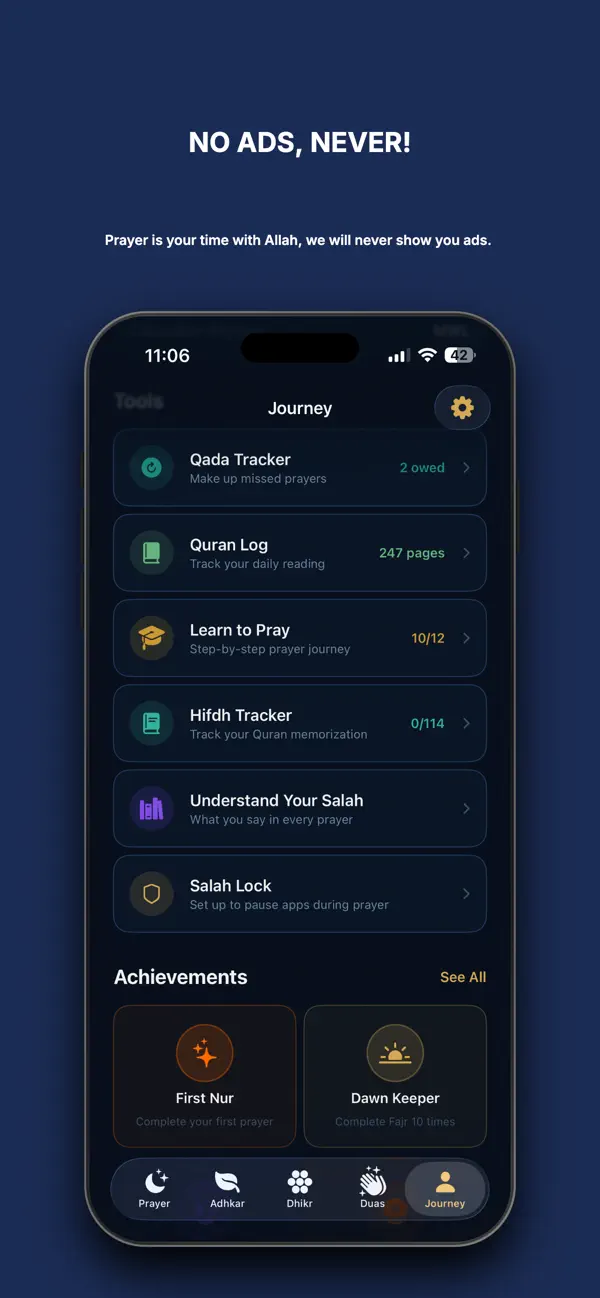
Hayya fits this handover unusually well. The Salah Nur streak, Hasanat points and Daily Quests speak fluent teenager without turning worship into shame — a weekly Tawbah Token protects the streak on a hard day, because the app's whole stance is mercy over guilt. The Learn section answers "what am I actually saying in salah?" — the question most teens won't ask out loud. And two things matter enormously for a kid's device: Hayya has zero ads and zero data selling (location never leaves the phone), and their prayer log is theirs — there's no parent surveillance dashboard, which is exactly why teens will actually use it. Give them the app, then resist the urge to inspect. Trust is the curriculum now.

A prayer companion your teen will actually open
Streaks with mercy, Learn to Pray, zero ads, zero data selling. Free forever on iPhone.
Download Hayya FreeMaking it joyful, whatever the age
A few threads that run through every stage: pray together when you can, because salah as a family ritual outlives salah as a rule. Attach small joys around the prayer — a story after Maghrib, a shared dua where everyone adds one request, the occasional mosque trip that ends in ice cream. Keep your own struggles honest; a parent who says "Fajr was hard for me today too" teaches more about repentance than one who performs perfection. And take the long view: you are not raising a seven-year-old who prays, you are raising a forty-year-old who prays. Every gentle year is an investment in that person.
FAQ
At what age should a child start praying in Islam?
Children are told to start at seven, with real seriousness expected by ten, per the well-known hadith. Before seven there's no obligation — they learn by watching you. The years between are for patient habit-building.
Should I punish my child for missing prayers?
The hadith describes graduated seriousness after years of gentle teaching — and scholars have always warned that harshness attaches fear to the prayer itself. Lead with routine, encouragement and example, and consult a trusted local imam about your specific situation.
Is a prayer app good for kids?
Under about ten, a paper chart on the fridge works better than a screen — grab our free printable charts. For teens with their own iPhone, an ad-free, guilt-free app like Hayya moves the reminders off your shoulders and onto theirs.